
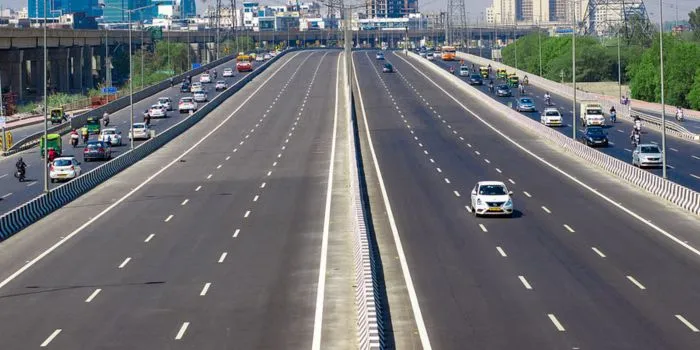
Kenya’s busy Nairobi-Nakuru-Mau Summit road is being designed to do more than simply carry more vehicles.
The Sh184 billion upgrade is set to introduce intelligent traffic management technology, giving road authorities new ways to monitor traffic, respond to incidents and provide motorists with real-time information.
The technology will form part of the wider upgrade of the 175-kilometre Rironi-Nakuru-Mau Summit section of the A8, one of Kenya’s most important trade corridors.
The project is expected to be completed by June 2027.

A highway that can ‘see’ traffic
The planned intelligent transport technology is significant because the Nairobi-Nakuru route has long struggled with congestion, particularly during weekends and public holidays.
Official project documents say the existing corridor faces heavy traffic volumes, congestion and safety problems. The upgrade is intended to increase capacity while improving the way traffic is managed.
Intelligent traffic systems can bring another layer to that work.
Depending on the final system adopted, motorists could receive information through electronic road signs, while traffic managers could use real-time data to identify congestion, crashes and other disruptions.
That could mean quicker responses when a lorry breaks down, an accident blocks a lane or traffic begins building up at a major interchange.
The project has already been described by the government as incorporating intelligent transport technology alongside new interchanges, pedestrian facilities, lighting, drainage and other safety measures.
But motorists will pay to use the upgraded road
The technology is only one part of a much bigger change.
The Rironi-Nakuru-Mau Summit project is being delivered through a public-private partnership, with tolling forming part of the financing model.
The PPP Directorate says the government has restructured the project to remove an annual Sh23 billion availability payment and shift revenue risk to the private sector.
KeNHA has indicated a toll of about Sh8 per kilometre for the upgraded corridor, although the final arrangements are governed by the project agreement and applicable approvals.
That means motorists will ultimately be weighing the cost of the toll against what they gain from the new road: shorter journeys, improved safety, more predictable travel and lower vehicle operating costs.
The PPP Directorate says the project is intended to deliver smoother journeys and more reliable travel times, with toll revenues also supporting road maintenance and safety services.
The road is being built in sections
The project has undergone several changes since earlier attempts to upgrade the corridor.
Current plans cover the 175-kilometre Rironi-Nakuru-Mau Summit A8 section, alongside a separate 58-kilometre Rironi-Maai Mahiu-Naivasha A8 South road project. KeNHA says the two proposals were evaluated under the PPP framework before the China Road and Bridge Corporation-NSSF consortium was selected as the preferred proponent for the main project.
Recent project updates show construction progressing, with KeNHA reporting in July that work had reached about 15 per cent on the CRBC section and about 10 per cent on the Shandong section. The authority maintained the June 2027 completion target.
The upgraded corridor will also include grade-separated interchanges, bypasses, drainage systems and additional road-safety facilities.
Why the project matters beyond Nairobi and Nakuru
The road is not simply a commuter route.
It forms part of the Northern Corridor, the trade artery linking the Port of Mombasa with Uganda and wider markets in East and Central Africa.
That makes delays on the route an economic issue as much as a transport problem.
For truckers, manufacturers and traders, a journey that becomes more predictable can reduce the uncertainty caused by traffic jams and accidents. For ordinary motorists, the immediate test will be simpler: whether the upgraded road actually makes journeys safer and faster.
The government's case for the project rests on that promise.
But as construction continues, the bigger test will be whether the new technology, tolling system and expanded road capacity work together to deliver a better experience without making the corridor too expensive for the people and businesses that depend on it.
Related Stories
- EACC arrests nine Treasury officials over alleged Sh1.57bn PROFIT funds fraud
- Homa Bay violence sparks outrage as Amnesty, Editors Guild demand accountability
- Who Was Gloria Sekeiyan Khalwale? A Mother of Eight Remembered After Sudden Death
Category: News
About the Author
Maureen Onyango is a journalist passionate about storytelling, life coaching and spiritual lessons. She studied at the Kenya Institute of Management and enjoys telling stories that inform, inspire and empower communities.
 Facebook
 Twitter / X
 WhatsApp
 LinkedIn
 Telegram
 Reddit