
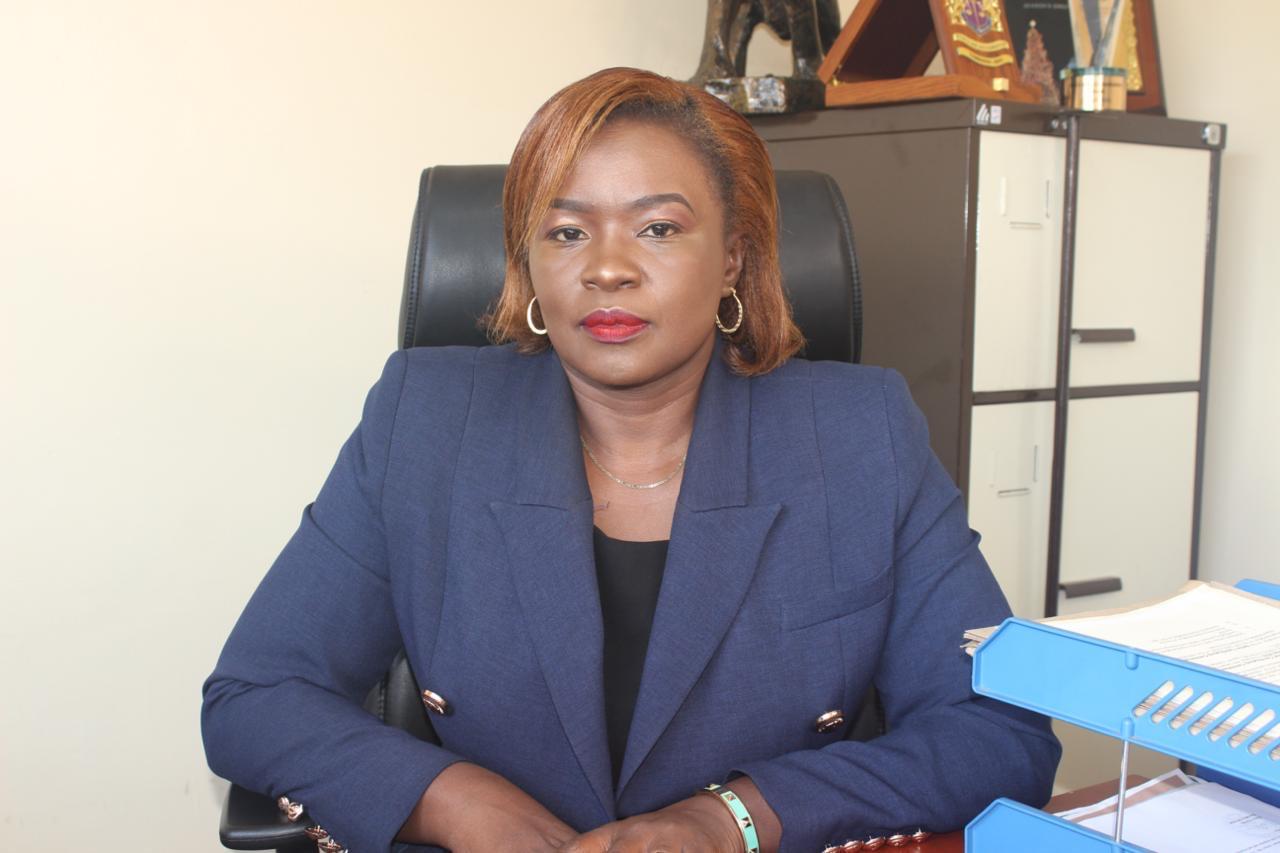
NAIROBI, Kenya — Veteran science journalist and former Kenya Editors’ Guild (KEG) Chief Executive Officer Rosalia E. Omungo Opondo has been appointed Chief Executive Officer of the African Genetic Biocontrol Consortium, a Pan-African organisation advancing research, knowledge exchange, and dialogue on genetic biocontrol technologies.
Omungo’s appointment takes effect February 1, 2026, according to a statement issued by the Consortium’s Founder and Chairman, Dr Willy Kiproitch Tonui.
The appointment marks a significant transition for Omungo, who moves from more than two decades in journalism, editorial leadership, and science communication into a continental leadership role focused on emerging biotechnology solutions in Africa.
The African Genetic Biocontrol Consortium is a not-for-profit, non-governmental organisation established through an agreement among member organisations committed to advancing African-led research, development, and implementation of genetic biocontrol strategies for animal welfare, public health, wildlife conservation, and environmental stewardship across the continent.
The Consortium works to strengthen African capacity, promote knowledge exchange, and create informed dialogue around genetic biocontrol technologies that could help address challenges in public health, agriculture, conservation, and environmental management.
Announcing the appointment, Dr Tonui said Omungo joins the organisation at a critical moment as conversations around genetic biocontrol technologies become increasingly important across Africa.
“Rosalia joins the leadership of the Consortium at a crucial time, six years after its founding, when building technical capacity, sharing knowledge, and discussing genetic biocontrol technologies in Africa are more important than ever,” the statement said.
Omungo is recognised as an accomplished science and environmental journalist with extensive experience reporting on health, science, climate change, and environmental issues.
Before her new role, she served as the inaugural CEO of the Kenya Editors’ Guild, the professional association representing editors in Kenya. During her six-year tenure, she helped strengthen the Guild’s institutional profile and position it as a leading voice in promoting professionalism, editorial excellence, and media development.
Her leadership at KEG came after a distinguished journalism career that included senior editorial roles at the Kenya Broadcasting Corporation (KBC), where she led health, science, and environment coverage.
Omungo has also been involved in advancing science journalism and public understanding of scientific issues. She completed the Knight Science Journalism Fellowship at the Massachusetts Institute of Technology (MIT) in 2017 and previously served as a television managing editor overseeing science-related coverage.
She was also an inaugural Earth Journalism Scholar at the University of California Berkeley Graduate School of Journalism in 2014 and has received recognition for her work, including the Commonwealth Award for Environmental Reporting in Africa in 2010.
Her academic background includes a Master’s degree in Development Communication from Daystar University and a postgraduate diploma in Broadcast Journalism from the University of Nairobi’s School of Journalism.
Omungo is a member of professional bodies including the Kenya Environment and Science Journalists Association (KENSJA), where she previously served as chair, the Kenya Editors’ Guild, the Society for Environmental Journalists (SEJ), and the US-based National Association of Science Writers (NASW).
The Consortium said that under Omungo’s leadership, it will continue providing a platform for African experts, institutions, policymakers, and stakeholders to engage on opportunities and challenges surrounding genetic biocontrol technologies.
The organisation said her leadership will support efforts to enhance technical capacity, strengthen knowledge sharing, and contribute to evidence-based decision-making by researchers, technology developers, policymakers, and other stakeholders working on Africa’s development agenda.