
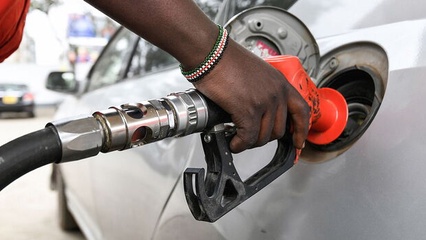
NAIROBI — A sharp drop in global oil prices has raised hopes of relief for Kenyan motorists and businesses just days before regulators announce the country's latest fuel prices.
International crude prices fell by nearly 4 per cent on Tuesday, easing after weeks of volatility driven by conflict in the Middle East. The decline comes ahead of the Energy and Petroleum Regulatory Authority's (EPRA) June-July fuel review, expected on June 14.
Brent crude, the global benchmark, closed lower at about $91 per barrel, while U.S. crude futures also posted significant losses. The fall followed signs that oil supply routes disrupted earlier this year were gradually returning to normal operations.
For many Kenyans, the timing is significant. Fuel costs remain a major concern, affecting everything from public transport fares to food prices and business operations.
Markets Respond to Easing Supply Fears
Oil markets have been highly sensitive to developments in the Middle East over recent months. Earlier disruptions along key shipping routes pushed prices sharply higher and raised fears of prolonged supply shortages.
However, traders have recently been encouraged by improved movement through major maritime corridors that are critical to the global energy trade.
U.S. Energy Secretary Chris Wright said shipping activity through the Strait of Hormuz had increased substantially, signalling a gradual recovery in supply flows.
The waterway is one of the world's most important oil transit routes, carrying a significant share of internationally traded crude. Any disruption there tends to have immediate consequences for global fuel prices.
Analysts say the recent decline reflects growing confidence that supplies will continue reaching international markets despite lingering geopolitical tensions.
Conflict Still Casts a Shadow
The market's optimism remains cautious.
While prices fell this week, investors continue to monitor developments across the Middle East closely. Fresh military exchanges between regional rivals briefly pushed prices higher earlier in the week before diplomatic efforts helped calm markets again.
President Donald Trump told reporters that discussions aimed at reducing tensions could produce an agreement within days, a development closely watched by traders seeking stability in global energy markets.
Even so, uncertainty remains.
Attention is also focused on the Bab al-Mandeb Strait, another strategic shipping corridor connecting the Red Sea and the Gulf of Aden. Any disruption there could affect fuel shipments moving between Europe, Asia and Africa.
Energy market observers note that oil prices can change rapidly when geopolitical risks escalate, meaning recent gains for consumers could be reversed if tensions intensify.
What It Could Mean for Kenya
For Kenya, the international price drop may strengthen the case for lower fuel prices in the upcoming review.
Diesel remains particularly important to the country's economy. It powers public transport vehicles, freight trucks, agricultural machinery and many industrial operations.
If lower global prices are reflected in Kenya's pricing formula, motorists and businesses could see some relief after months of elevated fuel costs.
However, local pump prices are influenced by more than international crude markets. Exchange rate movements, taxes, shipping costs and government policy decisions also play a role in determining the final prices consumers pay.
As Kenyans await EPRA's announcement, the latest developments offer a rare moment of optimism in an energy market that has been shaped by uncertainty for much of the year.
Whether that optimism translates into lower prices at filling stations will become clear when the regulator unveils its latest review later this week.
You may also like
Category: News
Related Video: What Dangote’s proposed Lamu oil refinery could mean for East Africa
Related Explainer: Inside Kenya’s crude supply puzzle as Dangote prepares to break ground in Lamu
 Facebook
 Twitter / X
 WhatsApp
 LinkedIn
 Telegram
 Reddit