
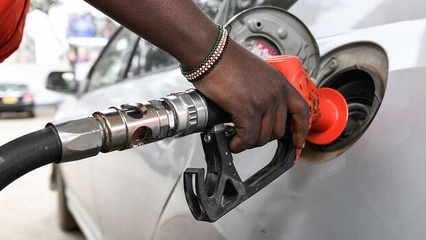
Kenya could begin seeing gradual relief at the fuel pump in the coming months, Energy and Petroleum Cabinet Secretary Opiyo Wandayi said on Friday, pointing to early signs of stability in the global oil market after months of price pressure.
Speaking during a press briefing in Nairobi, Mr Wandayi said international oil markets were beginning to settle as supply chains improved and global demand patterns shifted.
“Changes in demand patterns and improved supply routines are gradually stabilising international markets,” he said.
The remarks come at a sensitive moment for the government, which has faced mounting public frustration over rising fuel costs and their wider impact on transport, food prices and household spending.
Recent increases announced by the Energy and Petroleum Regulatory Authority triggered protests from sections of the transport sector, with matatu operators warning that high diesel prices were threatening livelihoods and raising commuter fares.
While cautioning that the global energy market remains volatile, Mr Wandayi suggested that Kenya could benefit if current trends continue.
“In the fullness of time, as global conditions stabilise, Kenyans can expect the benefits to be felt progressively through the system,” he said.
The Cabinet Secretary also sought to reassure the public over concerns about supply disruptions, insisting that Kenya currently has sufficient fuel stocks and is not facing shortages.
“It may look like a miracle that in Kenya the debate has been about price and not availability,” he said. “Many countries have struggled not just with high prices, but with fuel shortages.”
According to the ministry, Kenya’s fuel supply has remained stable largely because of the government-to-government fuel import arrangement introduced to shield the country from global supply shocks and foreign exchange strain.
Under the system, fuel cargo is sourced from several international routes, including Europe, the U.S. Gulf Coast, India and the Red Sea region.
Mr Wandayi said the arrangement had also helped maintain relatively predictable freight and premium charges, which directly affect the final pump price.
Government figures show freight and premium costs currently stand at about Sh10,100 per tonne for diesel, Sh10,877 for petrol and Sh12,562 for kerosene.
Even so, economists warn that local fuel prices remain highly vulnerable to international crude oil movements, exchange rate fluctuations and regional supply disruptions.
The Energy Ministry is also looking beyond short-term market shifts.
Mr Wandayi revealed that Kenya and regional partners were exploring plans for future refinery projects aimed at strengthening long-term energy security and reducing dependence on imported refined petroleum products.
For ordinary Kenyans, however, attention remains fixed on one question: whether the cost of fuel — and by extension transport and food — will finally begin to fall after months of pressure on household budgets.