
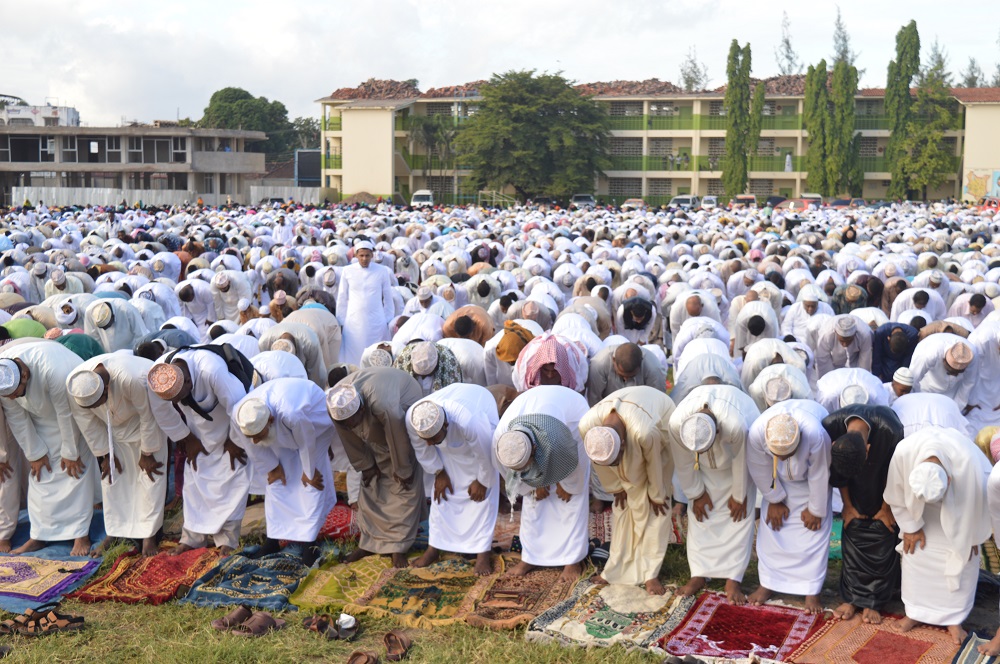
On Wednesday, Muslims across Kenya will gather in mosques, open fields and family homes to mark Eid al-Adha, one of the holiest days in the Islamic calendar.
The occasion, also known as the Festival of Sacrifice, has been declared a public holiday by the government, giving millions of Muslims in the country time to worship, celebrate and spend time with family.
The announcement was made through a special Kenya Gazette notice issued by Interior Cabinet Secretary Kipchumba Murkomen on Monday.
“It is notified for the general information of the public that, in exercise of the powers conferred by Section 3(1) of the Public Holidays Act, the Cabinet Secretary for Interior and National Administration declares that Wednesday, the 27th May, shall be a public holiday to mark Eid-ul-Adha,” the notice read.
For many Kenyans, the holiday means a day away from work and school. But for Muslims, Eid al-Adha carries deep spiritual meaning rooted in faith, sacrifice and compassion.
A Story of Faith and Obedience
Eid al-Adha commemorates the story of Prophet Ibrahim, known in Christianity and Judaism as Abraham. According to Islamic teaching, Ibrahim was commanded by God to sacrifice his son as a test of faith.
As he prepared to obey, God intervened and provided a ram instead.
For Muslims, the story represents complete trust in God and willingness to submit to divine will, even in difficult circumstances.
“It is a reminder of sacrifice, obedience and caring for others,” said Sheikh Jamaludin Osman, an Islamic scholar based in Nairobi. “The lessons of Eid are not just religious. They are about humanity, generosity and humility.”
The celebration falls on the 10th day of Dhul-Hijjah, the final month of the Islamic lunar calendar. It also coincides with the annual Hajj pilgrimage in Mecca, Saudi Arabia, one of the five pillars of Islam.
Because the Islamic calendar follows lunar cycles, the date of Eid changes every year depending on the sighting of the moon.
Prayers, Sacrifice and Sharing
On Wednesday morning, Muslims are expected to begin the day with special Eid prayers held in mosques and public grounds across the country.
After prayers comes one of the central traditions of the festival: Qurbani, the ritual slaughtering of animals such as goats, sheep, cows or camels.
The meat is traditionally divided into portions for family, friends and vulnerable households.
In many Kenyan communities, especially in Mombasa, Garissa, Isiolo and Nairobi’s Eastleigh area, Eid al-Adha is also a major social occasion marked by shared meals and family gatherings.
Community leaders say the act of sharing meat with poorer families remains one of the most important parts of the celebration, especially during difficult economic times.
Different From Eid al-Fitr
Eid al-Adha is often confused with Eid al-Fitr, another major Islamic holiday celebrated earlier in the year.
But the two occasions mark different events.
Eid al-Fitr comes at the end of Ramadan, the month of fasting. It is largely centred on thanksgiving and celebration after a month of spiritual reflection.
Eid al-Adha, by contrast, focuses on sacrifice, devotion and charity.
While both holidays involve prayer, family gatherings and acts of giving, Islamic scholars say Eid al-Adha carries a stronger emphasis on duty and compassion toward others.
A National Holiday in a Diverse Country
Kenya officially recognises Eid al-Adha as a public holiday as part of efforts to accommodate the country’s religious diversity.
Muslims make up a significant part of Kenya’s population, particularly along the coast and in parts of the north-east, though communities are spread across the country.
In recent years, public celebrations of Eid have increasingly become moments of interfaith interaction, with non-Muslim neighbours and friends often joining families for meals and festivities.
As the country prepares for the holiday, transport operators, livestock traders and businesses in major towns are already reporting increased activity ahead of Wednesday’s celebrations.
For many families, however, the heart of Eid remains simple: prayer, gratitude and sharing what they have with others.