
For Darwin Mutua, life changed in a moment.
An encounter with men who, according to Hon. Joseph M’Eruaki, were posing as boda boda operators allegedly ended in a brutal attack that left Mutua without an arm.
Weeks later, the physical wounds may be healing, but the consequences of the violence are likely to last much longer.
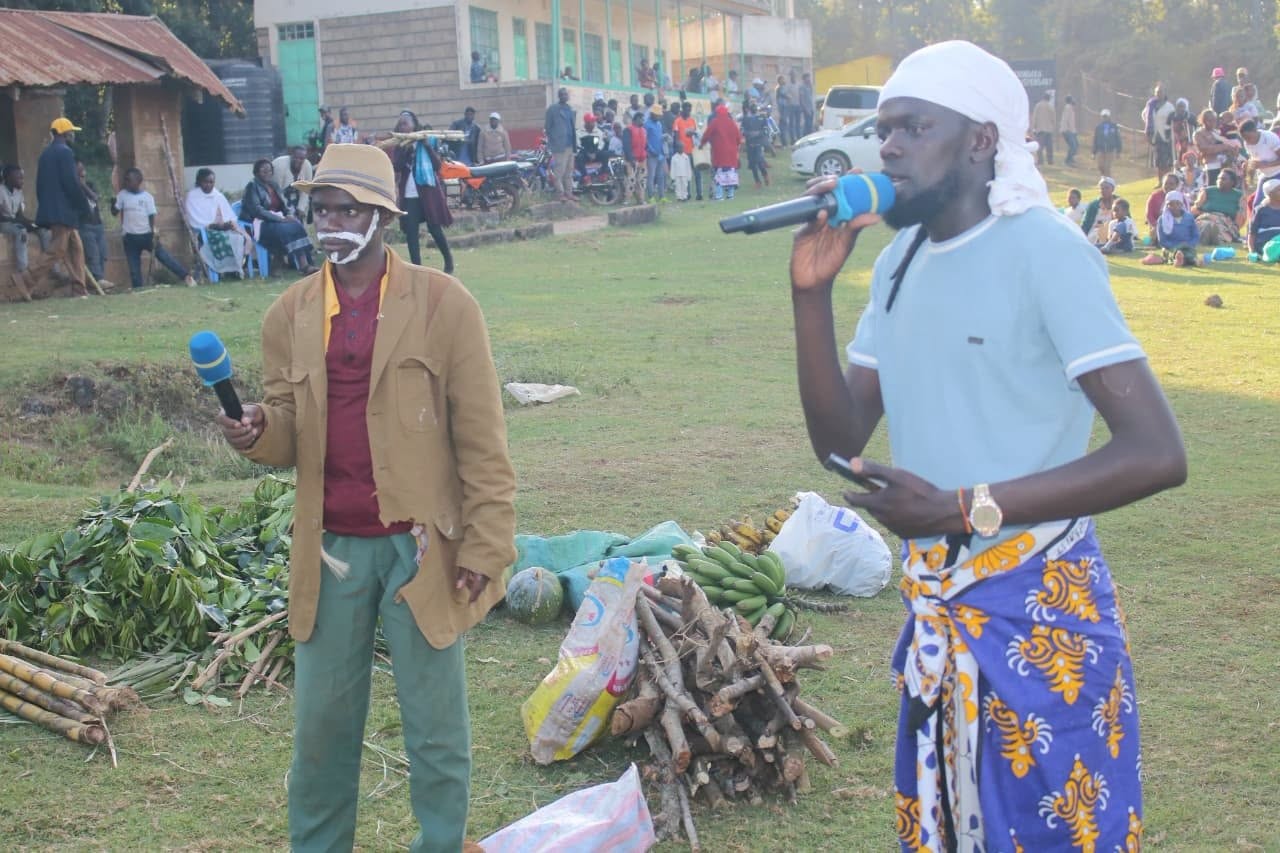
On 19 July, residents of Kirindara in Meru County gathered for a fundraiser to support Mutua as he begins the difficult process of rebuilding his life.
Among those who joined the community was M’Eruaki, who shared news of the fundraiser in a Facebook post.
“I had the privilege to join the people of Kirindara in a fundraising event to support Darwin Mutua,” M’Eruaki said.
He described Mutua as having lost his arm following what he called a brutal attack by criminals posing as boda boda operators.
“My thoughts and prayers remain with Darwin as he continues his journey towards recovery,” M’Eruaki added.
The account has brought renewed attention to the vulnerability of people who fall victim to violent crime — and to what happens after the headlines fade.
A life altered by violence
Losing a limb is not simply a medical event.
For someone who depends on physical work or mobility to earn a living, it can mean confronting an uncertain future.
There may be hospital bills, rehabilitation, psychological trauma and the challenge of adapting to everyday tasks that were once taken for granted.
For Mutua and his family, the fundraiser in Kirindara therefore represents more than a collection of money.
It is a statement that the community has not forgotten him.
In many parts of rural Kenya, community fundraising remains an important safety net when families are confronted with medical emergencies, accidents or other sudden crises.
The gathering for Mutua fits into that tradition — neighbours, friends and local leaders coming together at a moment when one of their own needs help.
The boda boda question
The circumstances described by M’Eruaki also touch on a sensitive issue in communities across Kenya.
Boda boda operators are an essential part of the country's transport system, particularly in rural areas where they connect villages, homes, markets and health facilities.
But criminals allegedly using the identity of boda boda riders can create fear and suspicion around an industry on which communities depend.
There is an important distinction, however.
M’Eruaki said the attackers were criminals posing as boda boda operators. His statement does not accuse legitimate boda boda riders of involvement in Mutua's attack.
That distinction matters because legitimate motorcycle operators are themselves part of the communities they serve.
The challenge for authorities and communities is therefore not simply to scrutinise boda boda operators, but to ensure that criminals cannot exploit the trust associated with the trade.
A community's response
Kirindara, in Igembe North Sub-County, is one of the communities where such transport services are woven into everyday life.
The fundraiser has shifted attention away from the attackers and towards the person left to deal with the consequences.
That is perhaps the most important part of Mutua's story.
Violent crime is often measured through arrests, court cases and police statistics.
But behind every statistic is a person.
There is a family facing unexpected expenses.
There is a victim learning to live with an injury.
And there is often a community deciding whether to stand by that person.
For Mutua, the people of Kirindara have chosen to stand with him.
What happens after the fundraiser?
The immediate financial support will matter, but Mutua's recovery is likely to require sustained assistance.
Depending on his circumstances, he may need continued medical care, rehabilitation, psychological support, an artificial limb or other assistive equipment, and help returning to economic activity.
That raises a broader question for Kenya: what systems exist to support victims whose lives are permanently changed by violent crime?
Fundraisers can help families survive a crisis, but they cannot replace long-term rehabilitation and social protection.
For now, however, the message coming from Kirindara is simple.
Darwin Mutua has suffered a life-changing loss.
But he is not facing its consequences alone.
The people who gathered to support him have offered something that money cannot fully measure — solidarity at a time when his future may look very different from the one he imagined.
And as Mutua continues his recovery, the hope expressed by M’Eruaki is that the community's support will remain with him beyond the fundraising event.
The attack has changed Darwin's life. Kirindara's response could help determine how he rebuilds it.
 Facebook
 Twitter / X
 WhatsApp
 LinkedIn
 Telegram
 Reddit