
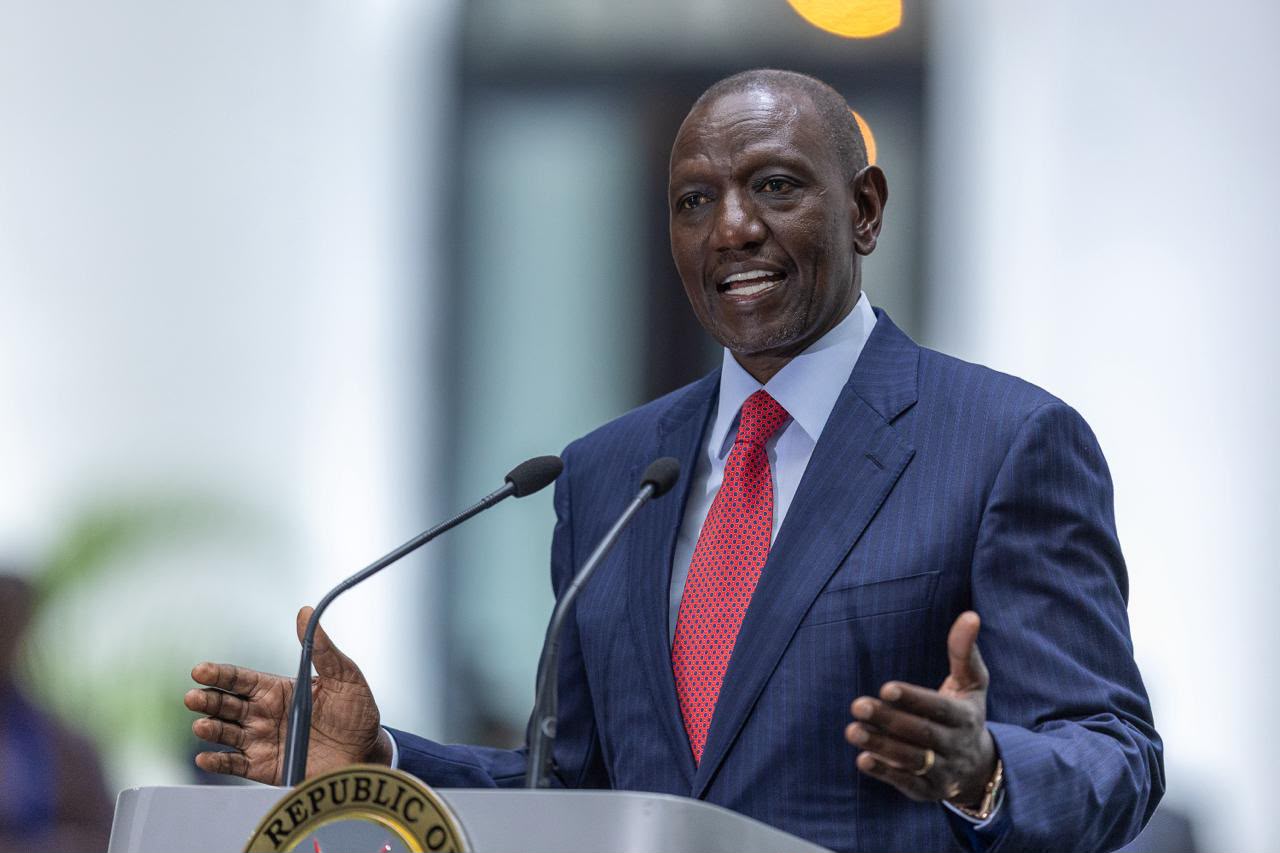
President William Ruto has opened a new political and economic debate in Kenya with a call for a national conversation to create a development vision for the country beyond Vision 2030.
But beneath the President's ambitious language about industrialisation, prosperity and a "First World" Kenya lies a potentially uncomfortable question for the opposition: what is its alternative?
In his televised address on Thursday, Mr Ruto argued that Kenya had reached a defining moment and needed to look beyond electoral cycles and short-term political interests.
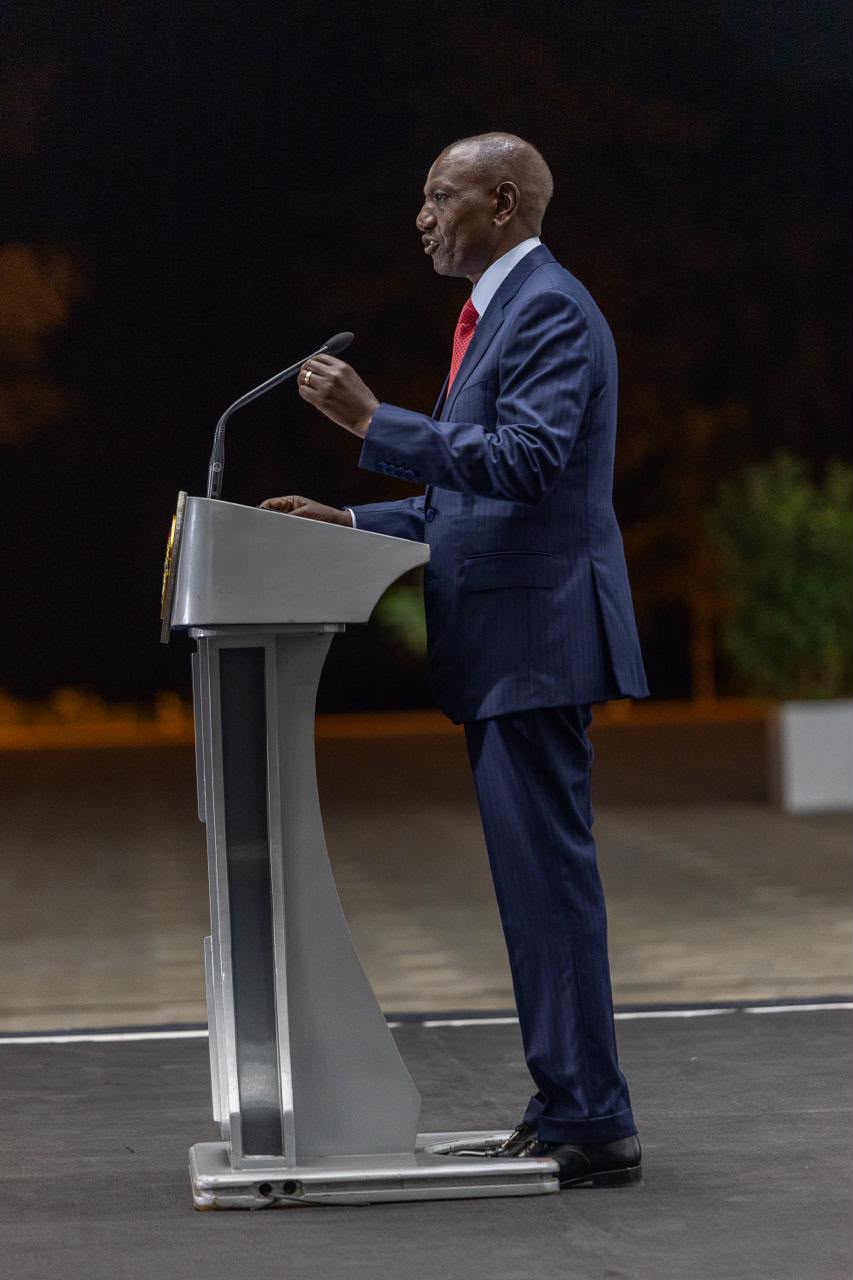
He announced that a National Conversation on Kenya's Future Beyond Vision 2030 would begin on 12 August, bringing together political parties, businesses, workers, faith groups, academics, civil society, innovators and young people.
The President presented the initiative as a generational project rather than another government policy document.
Yet it is precisely this attempt to move the political conversation into the long term that could force Kenya's opposition to sharpen its own message.
The unfinished promise of Vision 2030
Perhaps the strongest criticism available to the opposition comes from the President himself.
Mr Ruto acknowledged that Vision 2030 has not achieved all its ambitions. In particular, he said Kenya remains off target on the objective of becoming an upper-middle-income economy by 2030.
That admission raises a straightforward political question: why should Kenyans embrace another long-term vision when the existing one remains unfinished?
Vision 2030 was designed to transform Kenya into a newly industrialising, middle-income country with a high quality of life. Ruto now wants the country to look beyond it.
Opposition leaders are likely to argue that before embarking on another grand national project, the government should provide a detailed account of what went wrong with the previous one.
Which targets were achieved? Which were missed? Why were they missed? And who should be held responsible?
These questions could become central to the political debate.
A vision for the future versus problems of the present
The President's speech was dominated by the Kenya he wants to see in the coming decades.
He spoke about industrialisation, global competitiveness, investment, renewable energy, Africa's growing population and the possibility of Kenya becoming a high-income economy within a generation.
But opposition politicians have another powerful line of attack: what about the Kenya of today?
The government says the economy has stabilised.
Ruto pointed to foreign-exchange reserves of more than $15bn, lower inflation, declining borrowing costs and increased investor confidence. He also said Kenya attracted $3.2bn in foreign direct investment in 2025.
For the opposition, however, the test of an economic recovery is not necessarily the size of foreign-exchange reserves or investment figures.
It is whether households can afford food, fuel, rent, school fees and healthcare.
That creates a political contrast that may be difficult for the government to avoid: Ruto's Kenya of macroeconomic indicators versus the Kenya experienced by ordinary citizens.
The constitutional argument
The President also sought to make the Constitution the foundation of his proposed development charter.
He cited constitutional commitments to democracy, human rights, equality, social justice and the rule of law, as well as Article 43, which guarantees economic and social rights including healthcare, housing, food, water, social security and education.
But this creates another opening for his opponents.
If these rights are constitutional guarantees, opposition leaders can ask whether they should be presented as future development ambitions or treated as obligations that governments must progressively fulfil now.
That distinction matters politically.
It shifts the debate from what Kenya might become in 20 or 30 years to what citizens are entitled to expect from their government today.
What happened to corruption?
Another striking feature of the speech was what it did not emphasise.
Ruto spoke extensively about institutions, accountability, sustainable development and national purpose.
But corruption was not a central feature of his development argument.
For an opposition seeking to challenge the government, that omission provides an obvious point of attack.
Kenya's development challenge is not simply a question of producing a better blueprint. It is also about whether public institutions can implement plans efficiently, prevent waste and ensure public resources reach their intended beneficiaries.
The opposition can therefore ask whether a new development charter will make a meaningful difference without stronger mechanisms for dealing with corruption and misuse of public funds.
Who owns the new vision?
The President repeatedly insisted that the new development charter should belong to Kenyans rather than the government.
He said it should be shaped through an "open, inclusive, and honest national conversation".
That could become one of the most closely watched aspects of the process.
Ruto disclosed that he had already consulted political leaders, scholars, business leaders, faith leaders, professionals, civil society representatives and young people.
He also revealed that he had invited Professor Hiroyuki Hino, Professor Anyang' Nyong'o and other experts to examine Kenya's future and that they had already submitted strategic guidelines for long-term transformation.
That raises a legitimate political question:
How much of the new vision has already been developed before Kenyans are invited to participate?
If the August process is genuinely intended to be citizen-led, the opposition will want assurances that public participation will have a real influence on the final document rather than simply provide political endorsement for proposals already prepared by government-appointed experts.
The 2027 shadow
There is another unavoidable complication.
The national conversation will begin on 12 August 2026, just over a year before Kenya's 2027 General Election.
Ruto insisted that the process must rise above politics and electoral cycles.
But in Kenya, few major national political initiatives can escape the shadow of an approaching election.
The opposition could therefore portray the initiative in two very different ways.
One interpretation is that Ruto is genuinely attempting to establish a development framework that will outlive his administration.
The other is that the President is seeking to change the political conversation from the immediate record of his government to a longer-term promise of what Kenya could become.
That distinction will matter greatly as the 2027 campaign approaches.
The opposition's uncomfortable problem
For all the potential weaknesses in Ruto's argument, his speech creates a challenge for his opponents.
It is relatively easy to criticise the government's record.
It is much harder to articulate an alternative national development model.
If the opposition responds only by listing problems — high taxes, unemployment, the cost of living, corruption and public debt — it risks allowing the President to occupy the political territory of hope and long-term national ambition.
Ruto's proposition is simple: Kenya should stop thinking only about the next election and start planning for the next generation.
The opposition will need to answer with its own vision.
What should Kenya's economy look like in 2040?
Which industries should drive growth?
How should wealth be distributed?
What should healthcare and education look like?
How should Kenya deal with corruption?
How will young people find jobs?
And perhaps most importantly, how will the opposition pay for the Kenya it promises?
From slogans to measurable targets
The President has promised a national conversation.
But a development vision ultimately needs more than compelling language.
It needs measurable targets, financing mechanisms, implementation timelines and institutions capable of enforcing accountability.
This is where the opposition could make the strongest case for scrutiny.
If Kenya is to become a high-income, industrialised and globally competitive country within one generation, Kenyans will need to know precisely what that means.
What income level will define success?
How many jobs should be created?
How much manufacturing should Kenya have?
What percentage of children should complete quality education?
How quickly should universal healthcare become a reality?
And who will be held responsible if the targets are missed?
These are the questions that could turn Ruto's broad vision into a concrete political debate.
A new contest over Kenya's future
President Ruto has effectively invited Kenyans to think beyond the next election.
The opposition now faces a choice.
It can reject the initiative as another government project and concentrate on the failures it believes have characterised the current administration.
Or it can enter the conversation and attempt to shape the country's next development blueprint.
The second option carries risks, because participating could give the government political legitimacy.
But staying outside could leave Ruto with an important political advantage: the ability to define the terms of the country's future debate.
The President himself acknowledged that Kenya has missed opportunities in previous periods of global economic transformation.
His argument is that Africa's next economic transformation presents another chance.
The opposition's task is therefore not simply to ask whether Ruto's vision is credible.
It must also answer a more uncomfortable question:
If not Ruto's Kenya, then what Kenya?
That may prove to be the central political question as the country moves towards the 2027 election — and beyond.
 Facebook
 Twitter / X
 WhatsApp
 LinkedIn
 Telegram
 Reddit