
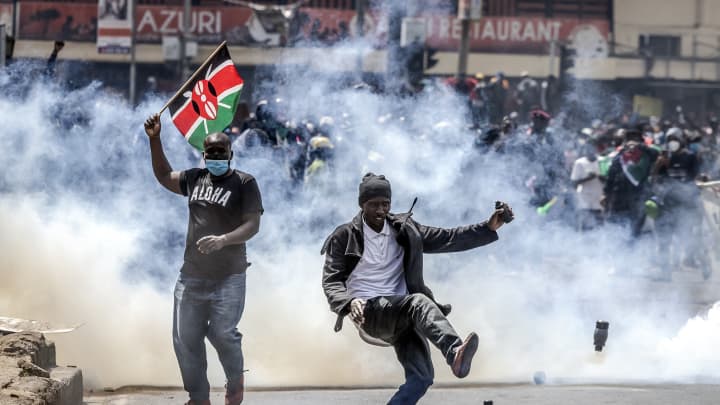
NAIROBI — The Kenyan government has begun paying compensation to victims of human rights violations linked to demonstrations and public protests, releasing KSh448.7 million to hundreds of beneficiaries in the first phase of a long-awaited reparations programme.
The payments, announced on Tuesday by the Panel of Experts on Compensation of Victims of Human Rights Violations, cover verified cases arising from protests and demonstrations that occurred between 2013 and 2025.
In a statement, the panel said 348 victims and families had received compensation after undergoing a verification process designed to assess the extent of harm suffered and confirm eligibility.
"The Panel of Experts on Compensation of Victims of Human Rights Violations, including those arising from demonstrations and public protests for the period 2013 to 2025, has officially commenced the reparation process by providing compensation to eligible and verified victims," the statement said.
The announcement marks a significant step in efforts to address grievances linked to years of political demonstrations, some of which ended in violence, deaths and serious injuries.
Under the first round of payments, families of 115 people who died during the period covered by the programme received KSh3 million each. The payments account for KSh345 million of the total amount disbursed.
The panel also approved compensation for survivors who suffered physical injuries during the protests. Twenty-four individuals categorised as having sustained severe injuries received KSh1 million each, while 137 people classified as having moderate injuries were awarded KSh500,000.
Sixty victims who sustained minor injuries received KSh50,000 each.
In addition, eight survivors of aggravated sexual offences linked to the incidents were awarded KSh1 million apiece. Four beneficiaries who experienced economic losses received KSh50,000 each.
Officials said every claim passed through a process that included registration, authentication, assessment of harm and formal approval before funds were released. The framework was developed using reparations guidelines prepared by the Kenya National Commission on Human Rights.
The panel emphasised that only individuals who had completed the verification process and formally consented to participate were included in the first phase.
"It is important to note that only those who have consented to this process are being compensated," the panel said. "Consent is the final act that a beneficiary must give to receive compensation. Eligible beneficiaries are encouraged to do so without delay."
The compensation programme follows the submission of a report by the Kenya National Commission on Human Rights to President William Ruto, after which the government indicated that payments would begin.
The move has been welcomed by some families who have spent years seeking recognition and redress for losses suffered during periods of political unrest. At the same time, concerns remain among individuals who say they were excluded from the compensation list despite claiming to have been affected.
Those complaints highlight the challenges facing authorities as they attempt to balance accountability, verification and fairness in a process involving incidents that span more than a decade.
For many of the beneficiaries, however, the payments represent more than financial support. They are also an acknowledgement of suffering that, for years, remained unresolved.
Whether the programme succeeds in delivering broader reconciliation may depend on how future phases address those still waiting for their claims to be reviewed.