
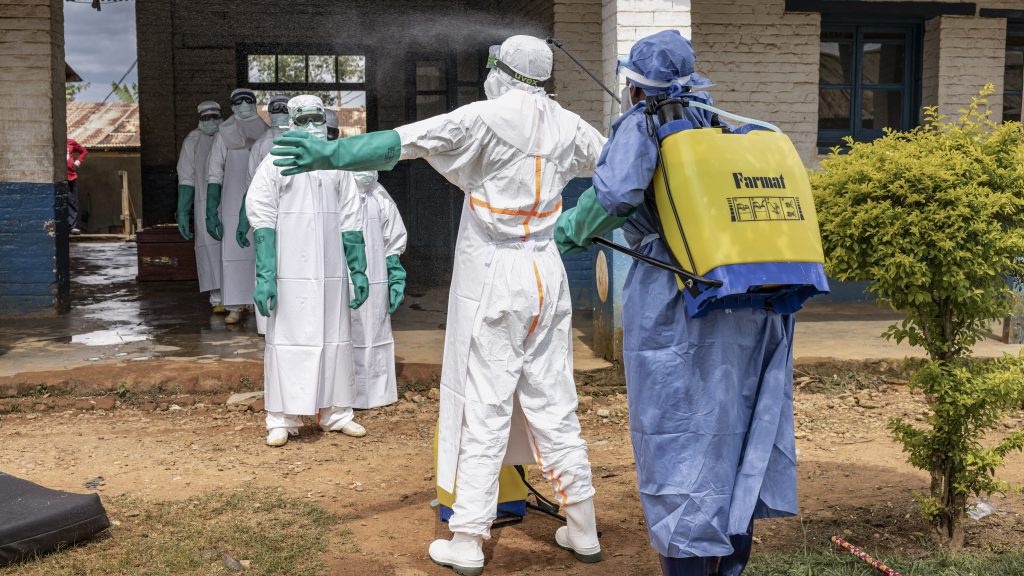
The United States government has sought to reassure Kenyans that a planned Ebola bio-isolation facility in Laikipia County does not pose a threat to nearby communities, as public concern and legal challenges surrounding the project continue to intensify.
In a statement released on Wednesday, the US Embassy in Nairobi said the facility forms part of a broader effort to prevent the spread of Ebola and strengthen regional preparedness against future outbreaks.
“The bio-isolation facility in Laikipia is part of a holistic response to prevent the spread of the disease and lessen health risks for the region as a whole; it does not pose a risk to nearby communities,” the embassy said.
The assurance comes at a time when the proposed facility has become one of the most debated public health issues in Kenya. Critics have questioned why Kenya should host a quarantine centre for American citizens who may have been exposed to Ebola, while supporters argue that the project could enhance the country's emergency response capabilities.
According to the US government, the initiative goes beyond the construction of a single facility. Officials say they are working alongside Kenyan authorities and international partners to improve border screening, expand laboratory testing and strengthen disease surveillance in areas considered vulnerable to outbreaks.
The embassy said increasing regional capacity to isolate and monitor individuals exposed to the virus would help Kenya preserve existing medical resources while improving preparedness in the event of a health emergency.
The project is linked to a broader American response to an ongoing Ebola outbreak involving the Bundibugyo strain in parts of Central and East Africa. US officials previously announced plans to establish a 50-bed facility at Laikipia Air Base to monitor American citizens who may have been exposed to the virus but are not showing symptoms.
The United States also highlighted its longstanding health partnership with Kenya, saying the two countries have collaborated for decades on disease surveillance, emergency response and public health programmes.
At the same time, the embassy outlined the scale of American funding directed towards Ebola response efforts across the region. It said direct US State Department support for the outbreak response has exceeded KSh20 billion, while additional funding has been channelled through international humanitarian programmes supporting affected countries, including the Democratic Republic of Congo, Uganda and South Sudan.
Despite those assurances, opposition to the facility remains strong.
On June 1, hundreds of residents in Nanyuki took to the streets to protest against the proposed quarantine centre. Demonstrators carried placards, blocked roads and demanded greater transparency from both the Kenyan and US governments. The protests followed a High Court decision to temporarily suspend the project pending the hearing of a legal challenge brought by civil society groups.
Reports from the protests indicated that tensions escalated as demonstrators attempted to approach the air base, leading to confrontations with security officers. Reuters later reported that two people were killed during the unrest, although authorities had not immediately issued a detailed public account of the circumstances.
The controversy has also drawn responses from Kenya's leadership. President William Ruto has defended the project, arguing that it is part of a wider preparedness strategy designed to strengthen the country's ability to respond to future health emergencies.
For now, the fate of the facility remains uncertain as court proceedings continue. While American officials insist the project will enhance public health security without endangering local communities, many residents in Laikipia say they are still waiting for convincing answers.
As the legal battle unfolds, the debate has evolved into a broader question about public trust, transparency and how countries should work together to manage global health threats.