
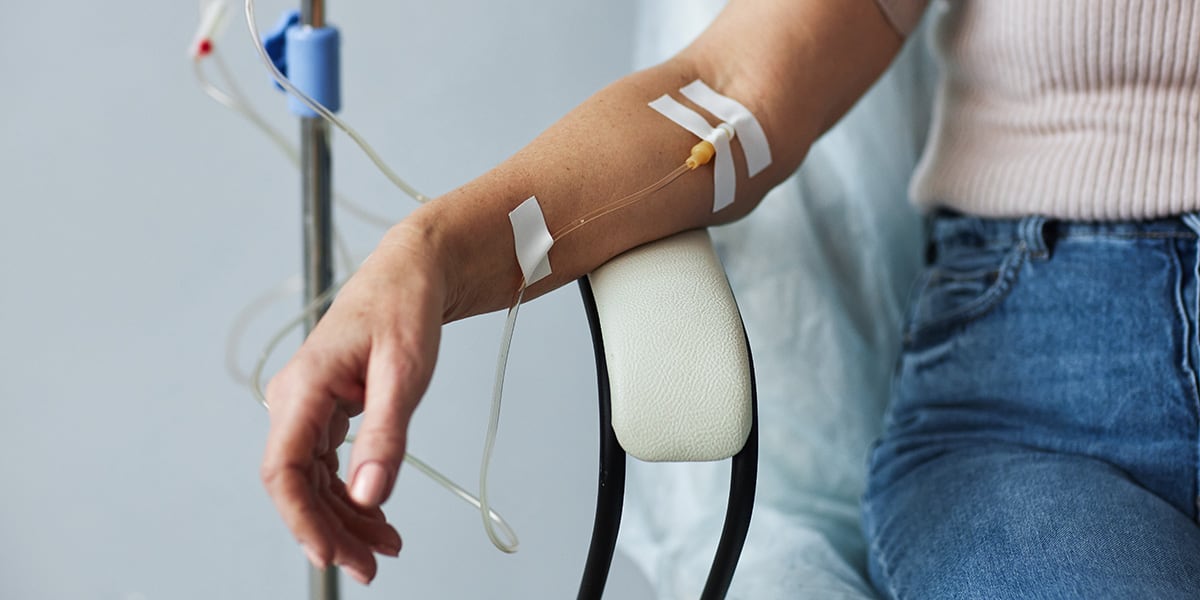
A major international study has raised the possibility that millions of people with breast cancer may be able to avoid chemotherapy, after researchers found that a DNA-based test can help identify who is likely to benefit from the treatment — and who may not need it at all.
The findings suggest a shift in how one of the most common cancer treatments is prescribed, potentially sparing many patients the physical and emotional toll of chemotherapy.
The trial, led by researchers at University College London, followed more than 4,000 women over the age of 40 who had recently been diagnosed with breast cancer. Patients were recruited across the UK, Norway, Sweden, Australia, New Zealand and Thailand.
At the centre of the study was a gene test known as Prosigna, which analyses the activity of 50 genes linked to breast cancer growth. It produces a score that estimates the risk of the disease returning after initial treatment.
Researchers found that around two-thirds of participants fell into a low-risk category. Those patients did not receive chemotherapy, and instead were treated with hormone therapy alone.
Their five-year survival rate stood at 93.7 per cent. Among those who did receive chemotherapy, the rate was slightly higher at 94.9 per cent.
Doctors said the small difference suggested that many patients currently offered chemotherapy may gain little or no additional benefit from it.
Chemotherapy remains a standard treatment after surgery for many breast cancer patients. It is also commonly used when the disease has spread to nearby lymph nodes. But it can come with severe side effects, including fatigue, nausea, hair loss, lowered immunity and fertility complications.
For patients, the findings speak to long-standing uncertainty about whether the treatment is always necessary.
Karen Bonham, 64, from Cardiff, took part in the trial. She said learning she could avoid chemotherapy felt like a turning point.
“It was an immense relief. It felt like Christmas,” she said.
Bonham received radiotherapy and hormone therapy instead, and said the experience of diagnosis had been overwhelming.
“A cancer diagnosis and treatment can be shocking,” she said. “It certainly propels you into a world of uncertainty. Life priorities realign. You simply want to survive.”
Researchers said the implications could be significant. They estimate that more than 5,000 patients a year in Britain alone could avoid chemotherapy if the test is adopted widely.
Prof David Miles, a cancer specialist involved in the research, described the results as potentially “practice-changing”.
“We can now identify many patients who simply will not benefit from chemotherapy,” he told BBC Newshour. “They should not have to go through the side effects for no gain.”
He added: “We used to treat 100 women to benefit 10. That means 90 were exposed to toxicity without reward.”
Not all patients have been able to avoid chemotherapy in the past, even when outcomes were uncertain. Tanya Hutson, diagnosed in 2022, said she welcomed the new findings, though her own treatment included chemotherapy.
“It’s absolutely amazing,” she said. “It just shows what research can do when it is properly supported. My chemo was brutal.”
The findings are set to be presented at the American Society of Clinical Oncology’s annual meeting in Chicago this week, one of the world’s largest cancer conferences.
Experts caution that the results apply only to patients over 40, and further research will be needed before extending conclusions to younger groups. Researchers say those studies are still several years away.
For now, the results point towards a future where treatment decisions may be shaped less by broad guidelines and more by the biology of each individual tumour — and where fewer patients may have to endure chemotherapy unless it is truly necessary.