
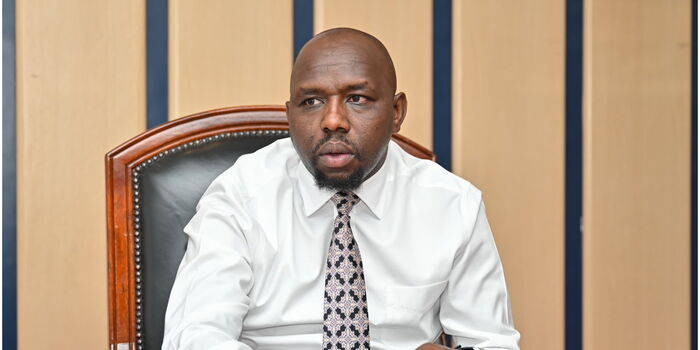
Interior Cabinet Secretary Kipchumba Murkomen has issued a firm reminder to Kenya’s police force: whether in uniform or plain clothes, the law still applies.
Speaking to reporters in Nairobi on Tuesday, Murkomen responded to growing public concern over the actions of plainclothes officers during the recent Saba Saba protests, where allegations of misconduct and unlawful killings have sparked national outcry.
“A police officer, whether in uniform or not, is still a police officer and must act within the confines of the law,” Murkomen said.
He made it clear that dressing in civilian attire does not grant officers immunity or freedom to operate outside legal bounds.
‘No Licence to Kill’
The Cabinet Secretary acknowledged that some officers operate undercover for investigative reasons or emergency response. Still, he insisted this must not erode their professional or legal obligations.
“Uniforms are only for identification—not a licence to act unlawfully,” he said. “The same law that prohibits a uniformed officer from killing or abusing citizens is the same law that applies to those in civilian attire.”
Murkomen added that the law makes no distinction between officers based on how they dress or the type of vehicle they use.
“Whether you’re driving a Subaru or walking in plain clothes, you are expected to uphold the law,” he said. “Any officer involved in unlawful killings must be investigated, and victims must get justice.”
No Death Squads, Says CS
Murkomen also addressed explosive claims made by former Deputy President Rigathi Gachagua and other opposition figures, who allege the existence of a shadowy police squad set up to conduct extrajudicial killings.
“There is no known police squad killing people,” Murkomen said firmly. “At least not in this administration—and none that the Cabinet Secretary is aware of.”
He called such claims dangerous and misleading, asserting that it would be both “unconstitutional and illegal” to set up any police unit with the purpose of executing citizens.
“All police formations and units in the country are meant to protect Kenyans—not harm them,” he added.
Mounting Scrutiny After Saba Saba
The remarks come amid heightened scrutiny of Kenya’s security forces following a spate of protests marked by alleged police brutality. Multiple human rights groups have condemned the use of excessive force, especially by officers in plain clothes who reportedly failed to identify themselves or follow procedure.
Murkomen’s comments appear aimed at calming growing public mistrust and sending a message of accountability within the ranks of law enforcement.
Public Demands for Reform
Pressure continues to mount on the government to investigate incidents of alleged misconduct and to clarify the role of officers operating outside visible structures of command.
As calls for justice grow louder—from families of victims and civil society alike—Murkomen’s statement will likely be seen as a test of whether accountability will follow rhetoric.
Whether this marks a shift toward greater transparency remains to be seen. For now, Kenyans are watching—and waiting.