
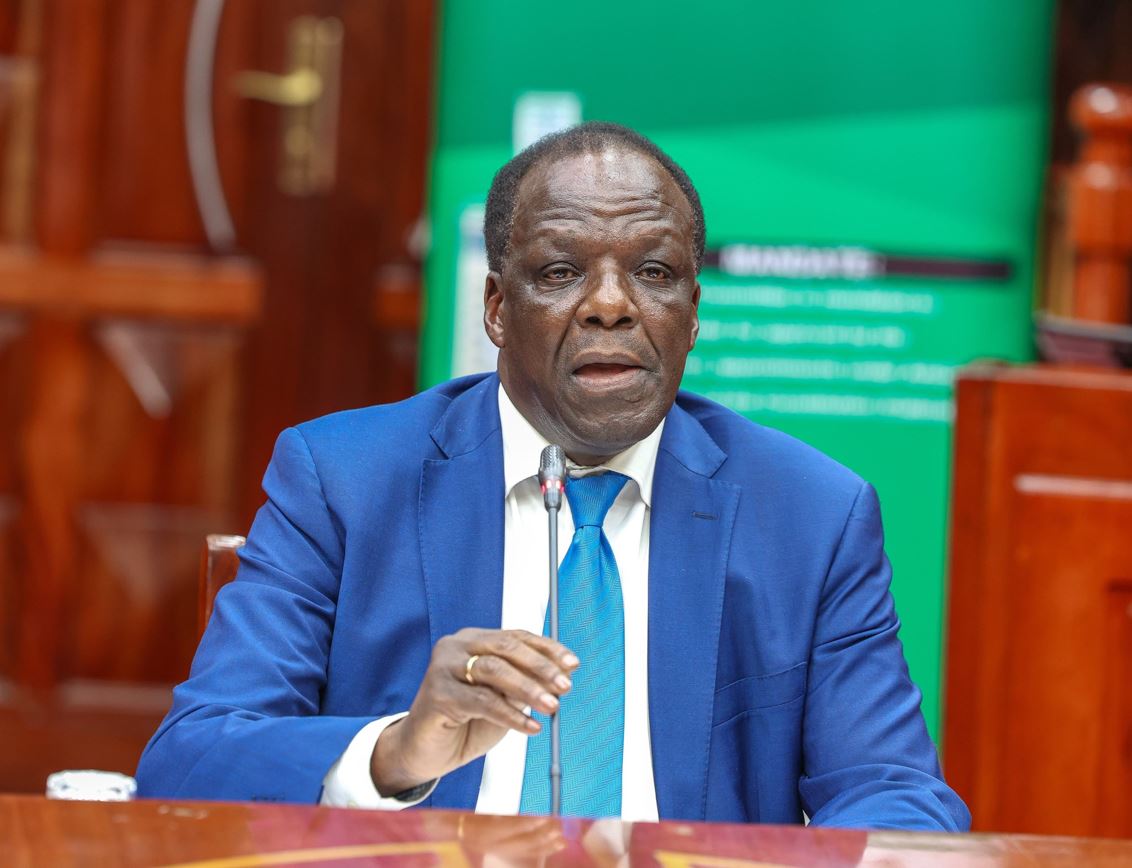
The moment lasted only a few seconds, but in Kenyan politics, a few words can signal months of strategic calculations.
Standing before a cheering crowd at an ODM rally, Minority Leader Junet Mohammed paused before making a declaration that immediately sparked speculation about President William Ruto's succession calculations.
"Nataka kuchukua nafasi hii, kualika, the next Deputy President of the Republic of Kenya, Wycliffe Ambetsa Oparanya."
The crowd erupted. Music began playing. Supporters danced and chanted Oparanya's name as the former Kakamega governor walked to the podium.
Whether the remark was spontaneous political theatre or a carefully choreographed message, it immediately fuelled debate about one question that has quietly grown louder in recent months:
Is President Ruto already being forced to think beyond Deputy President Kithure Kindiki?
No evidence has emerged that President Ruto intends to replace Kindiki, and no official announcement has been made. Constitutionally, the Deputy President remains in office unless removed through the procedures set out in law. But Kenyan politics has long been driven as much by symbolism and signalling as by formal declarations.
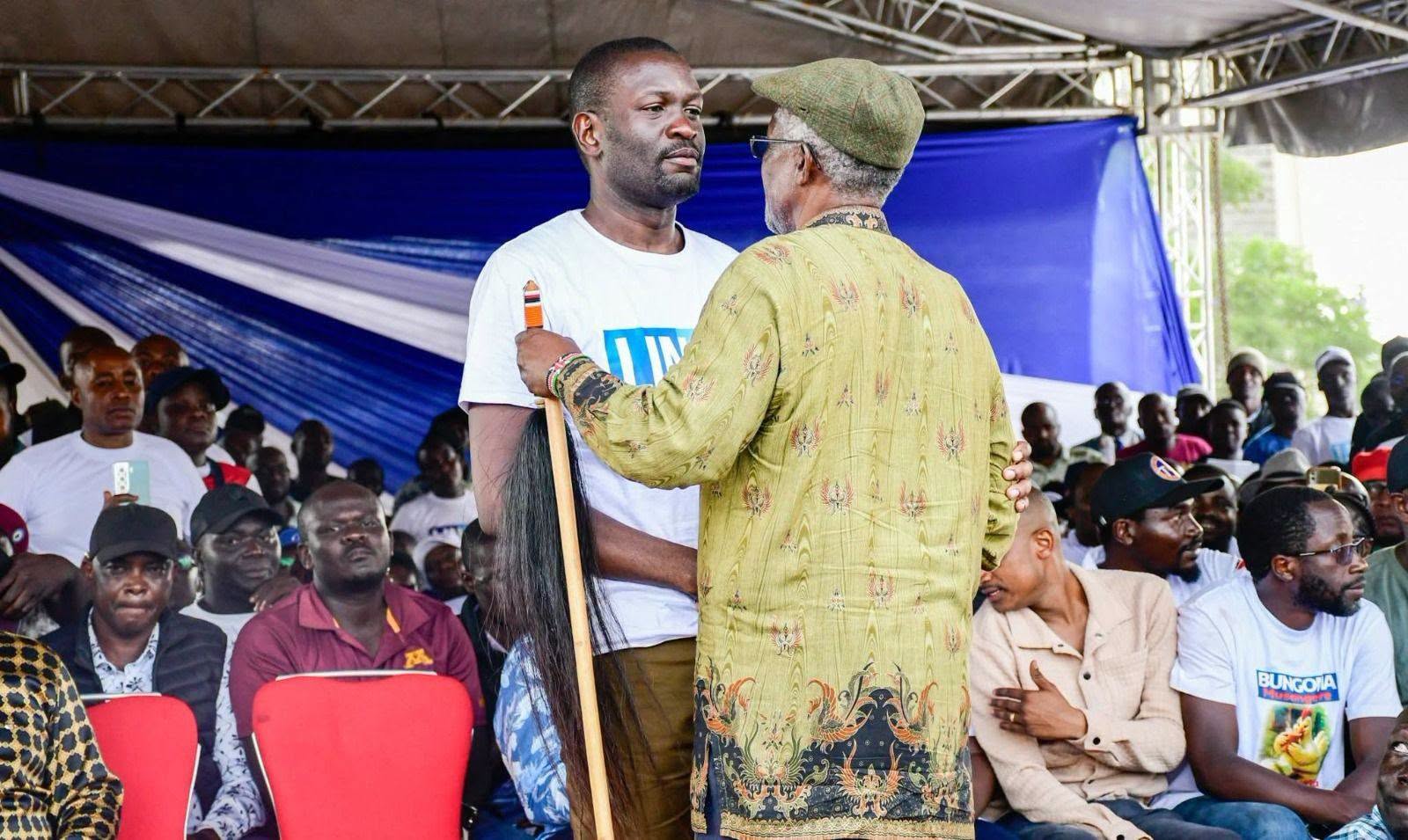
The symbolism surrounding Oparanya's introduction has therefore attracted attention because it comes at a politically delicate moment for Kindiki.
His appointment as Deputy President followed the impeachment of Rigathi Gachagua, placing him in perhaps the most politically demanding position in government. His immediate assignment appeared obvious: rebuild President Ruto's standing in the vote-rich Mount Kenya region after relations with Gachagua deteriorated.
Nearly a year later, however, that mission appears increasingly difficult.
The recent Ol Kalou parliamentary by-election has only intensified scrutiny. The governing UDA party failed to secure the seat, losing to the Democracy for Citizens Party (DCP), a result widely interpreted by political observers as another sign that UDA continues to struggle in parts of Mount Kenya. While one by-election does not necessarily predict a general election, such contests are often treated as barometers of public mood.
Critics of Kindiki have seized upon the result.
Former Deputy President Rigathi Gachagua has repeatedly argued that Kindiki lacks the political machinery and grassroots networks required to deliver the region for President Ruto. Those remarks are, unsurprisingly, politically interested, coming from a leader who remains at odds with the administration. They nevertheless reflect a narrative that has gained traction among sections of Kenya's political class.
Senior lawyer Ahmednasir Abdullahi has also questioned Kindiki's political future, publicly arguing that if he cannot reverse UDA's fortunes in Mount Kenya, he should consider stepping aside. Ahmednasir's comments represent his personal political opinion rather than evidence of government plans, but they have contributed to growing public debate over Kindiki's effectiveness.
It is against that backdrop that Oparanya's name has suddenly entered the conversation.
Unlike Kindiki, whose strength lies in administration and academia, Oparanya is widely regarded as one of ODM's most experienced political organisers. A former Cabinet minister, two-term governor of Kakamega and long-serving figure in Western Kenya politics, he commands significant networks across the region.
His recent cooperation with President Ruto through the broad-based government has already transformed him from opposition heavyweight to one of the administration's most influential allies.
That relationship inevitably raises political questions.
Could Oparanya become more valuable to President Ruto than merely serving in Cabinet?
Western Kenya has become one of Kenya's most unpredictable political battlegrounds. For years, ODM maintained overwhelming dominance across much of the region. More recently, however, the political landscape has become increasingly fragmented, with parties such as DAP-Kenya, Ford Kenya and ANC—before its merger into UDA—competing for influence.
Now another factor is emerging.
Edwin Sifuna.
The Nairobi Senator has been attracting unusually large crowds during recent visits to Bungoma, Kakamega, Busia, Siaya, Kisumu and other counties. While crowd sizes alone do not necessarily translate into electoral support, they have reinforced perceptions that Sifuna's national profile is growing, particularly among younger voters.
Unlike many leaders in Western Kenya, Sifuna's appeal is not confined to regional identity. His popularity has largely been built through his communication style, parliamentary performances and willingness to challenge both government and, at times, his own political allies. For many younger supporters, he represents generational change rather than conventional ethnic politics.
That presents both an opportunity and a challenge for President Ruto.
If Sifuna continues consolidating support in Western Kenya while simultaneously gaining acceptance in Nyanza and parts of Nairobi, he could emerge as one of the country's most influential opposition figures ahead of 2027. Such a development would complicate the ruling coalition's electoral arithmetic.
This is where Oparanya could become strategically important.
Unlike Sifuna, whose influence is still developing into an organisational network, Oparanya possesses established political structures, long-standing relationships with local leaders and extensive administrative experience. He remains one of the most recognisable political figures in the region.
From a purely strategic perspective, elevating Oparanya's national profile could strengthen President Ruto's appeal in Western Kenya while potentially limiting the political space available to emerging opposition figures.
That does not necessarily mean Oparanya could "stop" Sifuna.
Political influence is not a fixed commodity that simply transfers from one leader to another. Sifuna and Oparanya speak to somewhat different constituencies. Oparanya's strength lies in his experience, development record and established political networks. Sifuna's appeal is rooted in a younger generation that values direct communication, constitutional arguments and a more confrontational style of opposition politics.
The two politicians may therefore complement rather than replace one another in the imagination of many voters.
Another important consideration is that Western Kenya has rarely voted as a single political bloc. Luhya politics has historically been characterised by multiple influential leaders operating simultaneously rather than under a single dominant figure. From Masinde Muliro to Moses Mudavadi, Michael Wamalwa Kijana, Musalia Mudavadi, Eugene Wamalwa and now Oparanya, leadership has often been shared and contested.
Sifuna may simply be the latest entrant into that evolving landscape rather than its inevitable future.
For President Ruto, the broader political challenge extends beyond Western Kenya.
His administration must simultaneously rebuild confidence in Mount Kenya, retain support in Rift Valley, consolidate gains in Coast and attract new voters in Nyanza and Western Kenya. That requires balancing regional interests while avoiding perceptions that one constituency is being favoured at the expense of another.
Whether Junet Mohammed's declaration was playful rhetoric or an intentional political signal, it has succeeded in shifting the conversation.

Kenyan politics is often shaped by speeches that appear casual in the moment but acquire greater significance with time. Yet it is important to distinguish between political messaging and established fact. As things stand, there is no indication from State House that President Ruto intends to replace Deputy President Kindiki or that Oparanya is under consideration for the office.
What is clear is that Oparanya's prominence within the broad-based government is growing, Kindiki continues to face scrutiny over UDA's performance in Mount Kenya, and Edwin Sifuna's rising profile is reshaping conversations about the next generation of opposition leadership.
Whether these developments eventually intersect into a larger political realignment remains uncertain.
But if recent events are any indication, Kenya's race towards 2027 has already begun—not with official campaign launches, but with carefully chosen words on political stages that leave the country asking what comes next.

 Facebook
 Twitter / X
 WhatsApp
 LinkedIn
 Telegram
 Reddit