
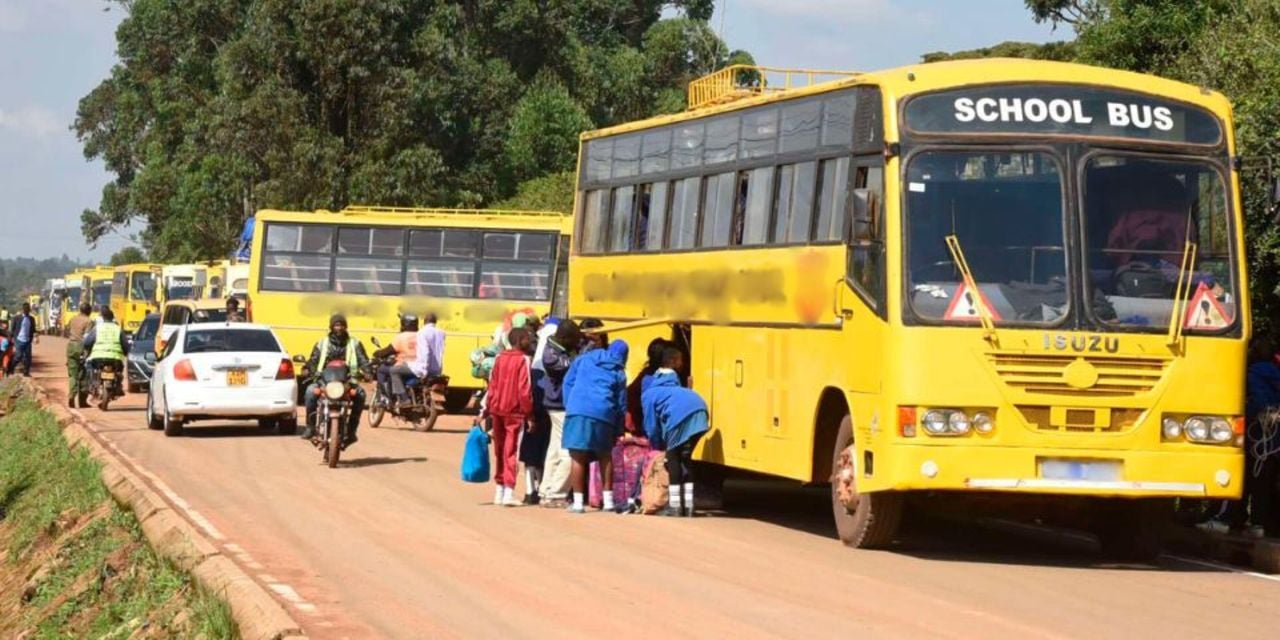
The Kenyan government has ordered an immediate crackdown on school buses operating at night, warning that any school caught breaking the law will face harsh penalties.
Basic Education Principal Secretary Julius Bitok issued the directive during the Kenya National Music Festivals in Meru on Monday, calling for full enforcement of the 2017 Traffic (Amendment) Act, which prohibits night travel for school transport vehicles.
“This is not a guideline. It’s the law,” said Bitok. “I am instructing all regional, county, and sub-county directors of education to ensure full compliance. Any school or individual found violating this directive will face the full force of the law.”
The law, which restricts school buses from operating between 6:30 p.m. and 6:00 a.m., was introduced after a series of fatal accidents involving students travelling at night.
The renewed crackdown comes amid growing concern over lax enforcement, especially during national school events like the ongoing music festivals. But Bitok was clear: the law applies everywhere.
“This is not about the music festivals,” he told a crowd gathered at the event. “The Ministry will not compromise on the safety of learners under any circumstances.”
Funding Relief and New Opportunities for Young Performers
In a separate announcement, Bitok confirmed that funds for transport and accommodation for students taking part in the music festival would be released without further delay. This follows discussions with the CEO of the Sports Fund, he said.
He also revealed that the Ministry of Education is working on a proposal to create a new international platform for top-performing student artists—one that goes beyond the traditional State Gala.
“Why should the Nationals or the State Gala be the peak?” Bitok asked. “We want the best of Kenya to represent us globally. This could be part of the President’s legacy in arts and culture.”
The move signals a broader ambition to elevate Kenya’s position in global arts while providing meaningful exposure to talented students.
Zero Tolerance for Misconduct
Bitok did not mince his words when addressing reports of teachers preying on students during festivals. “This is a children’s event,” he said sternly. “Anyone found exploiting or endangering our students—we will come for you. That era is over.”
The Ministry, he said, is committed to safeguarding all learners and ensuring that festivals remain safe spaces for students to thrive.
Empowering Youth Through Talent
Finally, Bitok urged education leaders and policymakers to support efforts to monetise student talent—particularly for those from marginalised backgrounds.
“Our children are gifted,” he said. “Let’s not just celebrate their talents, let’s empower them to earn from them. We must support systems that commercialise creativity without exploiting the artist.”
With this firm and far-reaching directive, the government appears keen to restore discipline, protect learners, and reimagine how the arts can uplift a new generation of young Kenyans.