
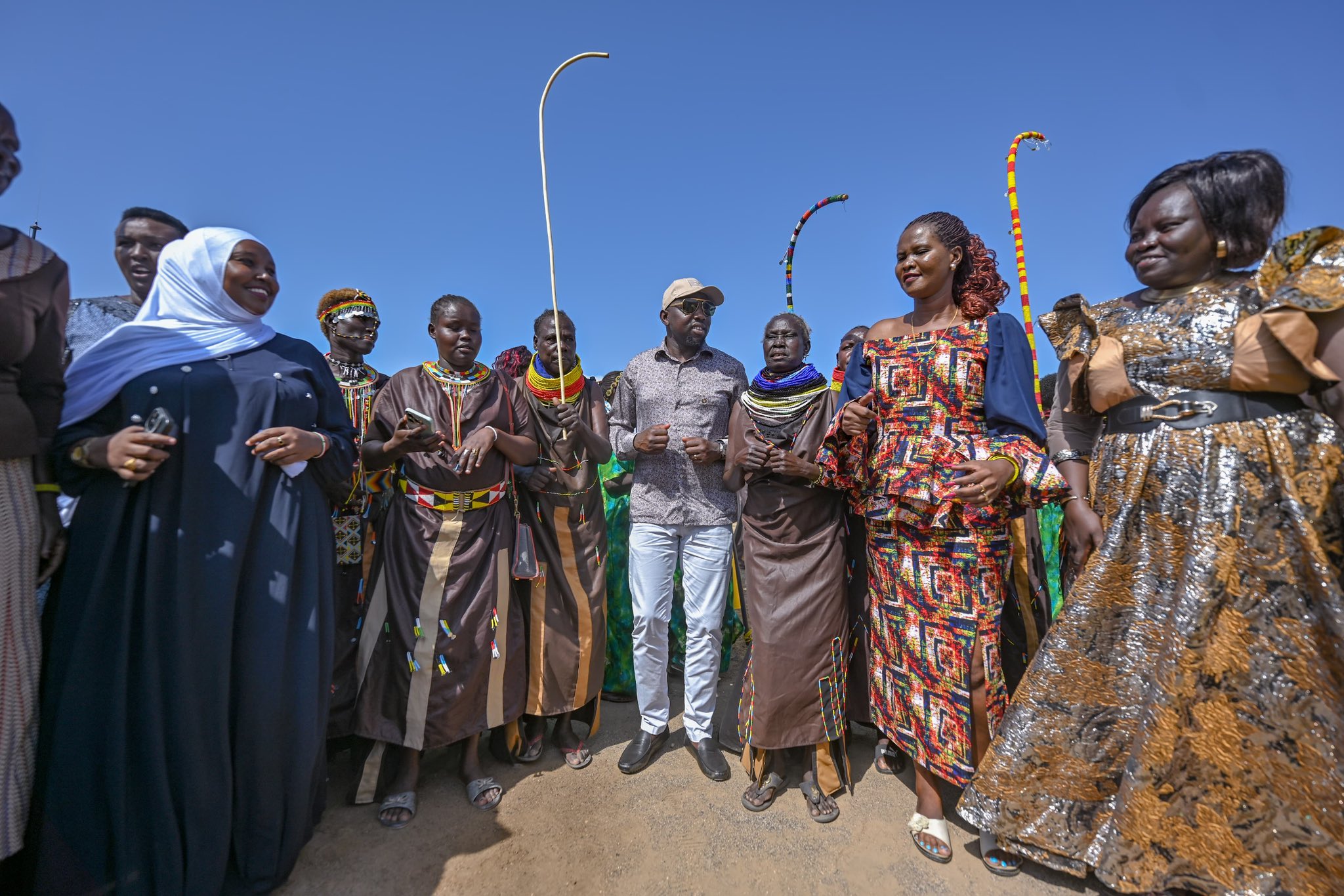
LODWAR, Kenya —
The government is considering easing the years-long curfew in parts of Turkana County as security stabilises in the troubled region, Interior Cabinet Secretary Kipchumba Murkomen said on Wednesday.
Speaking after a high-level security meeting in Lodwar, Murkomen said the government is encouraged by recent calm in previously volatile areas, particularly Turkana South and Turkana East.
“I will be reviewing the curfew timing based on the security briefing to give locals more time as we monitor the situation,” Murkomen told reporters. “If the conditions continue improving over the next three months, we may consider lifting the orders entirely.”
Currently, a dusk-to-dawn curfew remains in place from 10:00 p.m. to 4:00 a.m. in parts of Turkana, including the Kakuma and Kalobeyei refugee settlements. The restrictions were first introduced in early 2023 and extended into 2025 in response to escalating insecurity—ranging from inter-communal violence and bandit attacks to rising tension at the refugee camp.
Hard-Hit and Long-Overlooked
Turkana, Kenya’s second-largest county by land mass, has long grappled with a cocktail of security concerns. These include armed banditry, porous borders, ethnic conflicts, and climate-induced displacement.
“We’re dealing with complex dynamics here,” Murkomen said. “There’s the issue of the refugee camp. Shortages of food and essential supplies are stirring unrest in Kakuma, which has a spillover effect on the surrounding communities.”
The Interior CS also highlighted cross-border security concerns involving pastoralist communities in South Sudan, Uganda, and Ethiopia, which neighbour Turkana. “Turkana faces insecurity from within and beyond our borders,” he added.
Operation Maliza Uhalifu Bearing Fruit
Murkomen credited the relative calm to the ongoing Operation Maliza Uhalifu—a government security campaign targeting organised crime and cattle rustling across Kenya’s north. He said that while the situation remains fragile, results are visible.
Beyond the curfew, Murkomen acknowledged wider issues under discussion, including police reforms, human-wildlife conflict, refugee management, and implementation of the Shirika Plan—Kenya’s strategy to integrate refugee communities into local economies.
Cautious Optimism Among Locals
Locals and business owners along the Kainuk–Lodwar corridor, a critical trade route in the region, have for months expressed frustration over the curfew's economic toll. Many say it has hampered movement, trade, and access to services.
If lifted, the move would be a welcome relief for residents hoping to rebuild their livelihoods after years of violence and isolation.
Still, Murkomen urged patience, saying that the government’s priority remains lasting peace. “The review must be guided by facts on the ground. We can’t afford to slide back,” he said.
For now, Turkana watches and waits.