
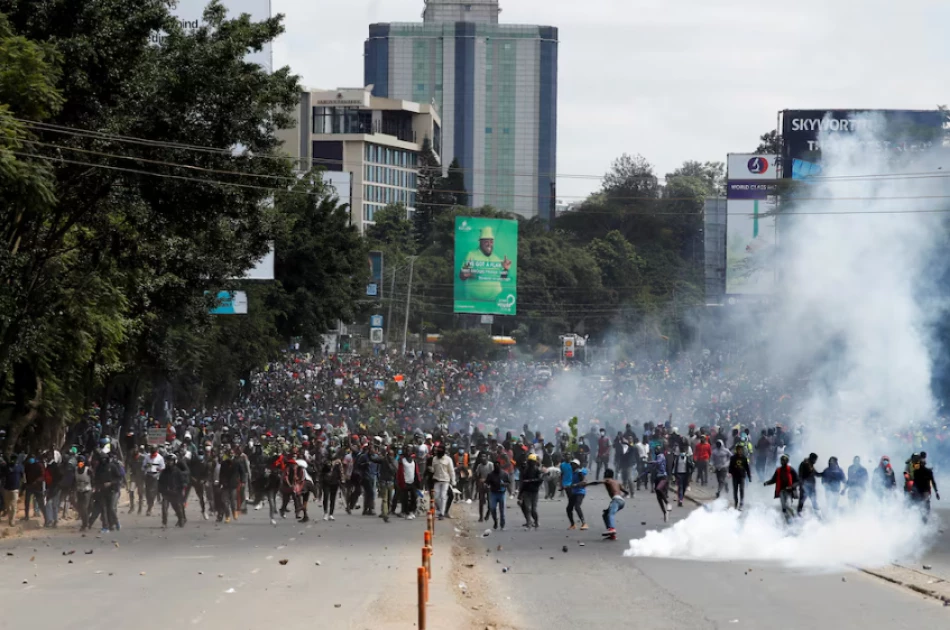
Kenya’s communications regulator has ordered all television and radio broadcasters to stop live coverage of nationwide protests taking place on 25 June, sparking concern among journalists and civil rights groups over media freedom in the country.
In a formal notice issued Wednesday morning, the Communications Authority of Kenya (CA) instructed stations to halt live reporting of the demonstrations, warning that failure to comply would lead to “regulatory action.”
The directive, signed by CA Director General David Mugonyi, cited alleged violations of Kenya’s Constitution and the Kenya Information and Communications Act.
“This is therefore to direct all television and radio stations to stop any live coverage of the demonstrations forthwith,” the statement read. “Failure to abide by this directive will result in regulatory action.”
Mr Mugonyi referenced Articles 33(2) and 34(1) of the Constitution, which outline limits to freedom of expression and press freedom, along with Section 461 of the 1998 Communications Act.
But the directive has drawn sharp criticism from media watchdogs, who say it threatens press independence at a time when public accountability is essential.
“This kind of order has a chilling effect on journalism,” said a senior editor at one Nairobi-based television station, who requested anonymity to speak freely. “When the government blocks the media from showing what’s happening on the ground, the public loses trust — in both the media and the state.”
Chaos on the Streets
The blackout order came as fresh confrontations broke out in central Nairobi, where protesters gathered to mark the one-year anniversary of the 2024 anti-Finance Bill demonstrations — a movement led largely by Kenya’s Gen Z. That wave of protest ended in deadly clashes with police and left dozens dead, many of them young.
On Wednesday, police again used tear gas to disperse crowds marching along city streets. Demonstrators had planned peaceful processions to honour those who lost their lives, but tension quickly escalated after officers blocked key roads and began firing canisters near the Nairobi Archives and Kenyatta Avenue.
The protests — taking place in Nairobi and other cities — have drawn thousands, with many carrying flowers, placards, and photos of last year’s victims. Despite the heavy police presence, demonstrators have mostly remained non-violent.
Media Freedom in Question
Kenya has long prided itself on having one of East Africa’s more vibrant media landscapes. But in recent years, journalists and media rights groups say press freedom has come under increasing strain, particularly during politically sensitive events.
Wednesday’s blackout is not the first time broadcasters have been pressured to go off-air. Similar restrictions were imposed during previous election cycles and major anti-government demonstrations.
Article 34 of Kenya’s Constitution guarantees freedom of the media, including protection from state interference. However, the government maintains that it has the right to intervene when coverage is deemed to incite violence or threaten national security.
The CA has not provided specific examples of what it considered unlawful about the ongoing protest coverage.
Public’s Right to Know
Kenyan social media platforms remained abuzz on Wednesday with livestreams, images, and updates from protest sites — a sign that while television may have gone quiet, the country’s digital spaces remain active.
For many, the question now is not just whether live coverage will return — but whether the media can continue to operate without fear of retribution.
“Silencing the media doesn’t silence the people,” said Maina Kiai, a prominent human rights advocate. “It only deepens the public’s suspicion and damages democracy in the long run.”
As demonstrators continued to march into the evening, and broadcasters weighed legal risks against public duty, one thing was clear: Kenya’s battle over who gets to control the national narrative is far from over.