
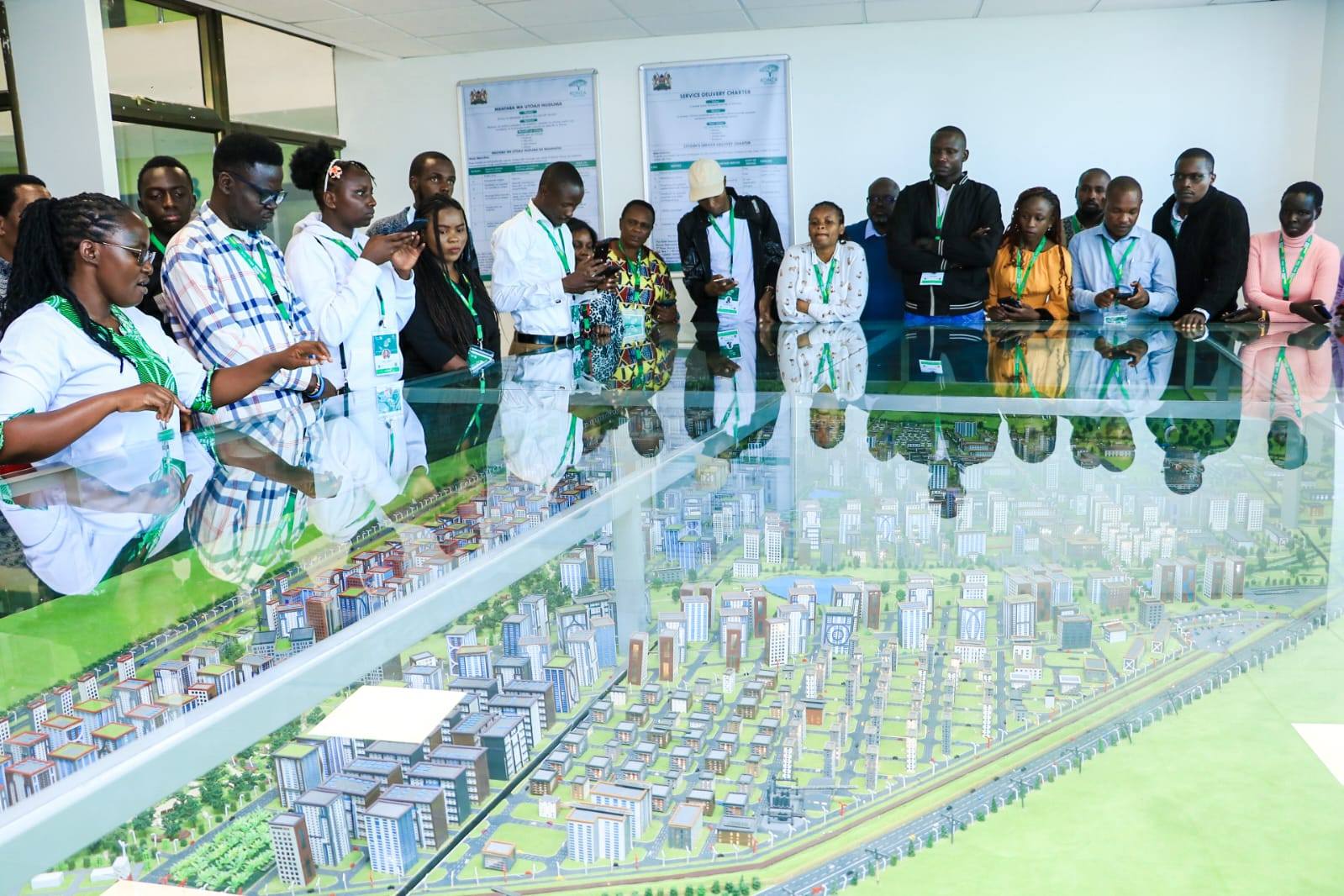
After years of promises, Konza is now operational, 30 companies are reportedly on site and major infrastructure has been completed. But the real test is whether the technology city can turn billions in investment into lasting jobs and businesses for Kenyans.
For years, Konza Technopolis has been presented as Kenya's answer to Silicon Valley — a futuristic city expected to attract technology companies, research institutions, investors and thousands of jobs.
Now, the project is entering a different phase.
The government says Phase One of the 5,000-acre development has been completed and is operational, while at least 30 companies are currently working from Konza. About 80% of Phase One has also been committed to investors, according to the Konza Technopolis Development Authority.

But the question Kenyans are increasingly asking is more practical: how many jobs and opportunities is Konza actually creating?
The latest official data provides a more complicated picture.
According to the 2026 Economic Survey, direct jobs at Konza fell to 1,137 in 2025, from 3,000 in 2024. The decline partly reflects the changing nature of the project as major construction activity winds down and the city moves towards operations and investment. At the same time, the number of startups supported increased from 20 to 51, while supported innovations rose from 22 to 55.
That makes the next phase particularly important.
From building Konza to filling it
The infrastructure is becoming increasingly substantial.
In June, the Kenya Electricity Transmission Company energised the 98-kilometre Isinya–Konza 400kV transmission line and Konza substation, strengthening electricity supply to the technopolis and surrounding developments.
The government is also developing data-centre infrastructure. Official project monitoring shows the Disaster Recovery Data Centre had reached 96% completion, with system acceptance, handover and customer onboarding planned. Other projects are complete and operational, while additional facilities remain under development.
Konza is therefore no longer simply a construction project.
It is becoming an operating technology ecosystem.
The challenge is ensuring that ecosystem produces opportunities beyond the gates of the technopolis.
What South Korea has to do with it
South Korea has been one of Kenya's important partners in developing Konza's technology infrastructure.
Government project records show that the Export-Import Bank of Korea is reviewing the financing framework for some Konza-related projects as Kenya seeks to transition from the Economic Development Promotion Facility to the Economic Cooperation Development Fund. The government says stronger engagement between Kenya and South Korea is needed to move the financing process forward.
That relationship matters because South Korea offers Kenya a potentially useful model: moving from infrastructure investment into technology manufacturing, research, skills development and globally competitive companies.
But Kenya will need to avoid measuring success simply by the number of buildings completed.
The jobs question
For young Kenyans, the ultimate measure will be employment.
Konza's own recruitment activity offers a glimpse of the skills it expects to need. In 2026, the authority advertised positions including cloud development, IoT engineering, information systems auditing and IT programme management.
Those are precisely the kinds of skills Kenya will need if Konza is to become more than a real-estate development.
But there is a wider challenge.
Kenya's digital economy is growing while the number of young people seeking employment continues to rise. The country therefore needs technology investments that create not only highly specialised jobs, but also opportunities for startups, freelancers, suppliers, technicians, researchers and smaller Kenyan businesses.
The next test
Konza's original promise was never simply to create a smart city.
It was to help transform Kenya into a knowledge-based economy.
The foundations are increasingly visible: electricity, data infrastructure, research and innovation facilities, investors and companies.
The next chapter will be judged differently.
Can Konza attract enough companies to fill its infrastructure? Can Kenyan startups grow there? Can universities connect students to real jobs? And can the technopolis generate thousands of sustainable jobs rather than temporary construction employment?
Those questions will determine whether the long-running “Silicon Savannah” vision becomes an economic reality — or remains one of Kenya's most ambitious unfinished promises.
Related Stories
- Kenya’s $50,000 visitor insurance rule is on hold — what travellers and tourism businesses need to know
- Will Kenya’s internet become metered? What the proposed law could mean for your Wi-Fi bill
- Lamu Residents Demand 70% of Jobs as Dangote's $17bn Refinery Nears Costruction
Category: Business
Related Explainer: Kenya’s short rains: What the 2026 forecast means for you
 Facebook
 Twitter / X
 WhatsApp
 LinkedIn
 Telegram
 Reddit