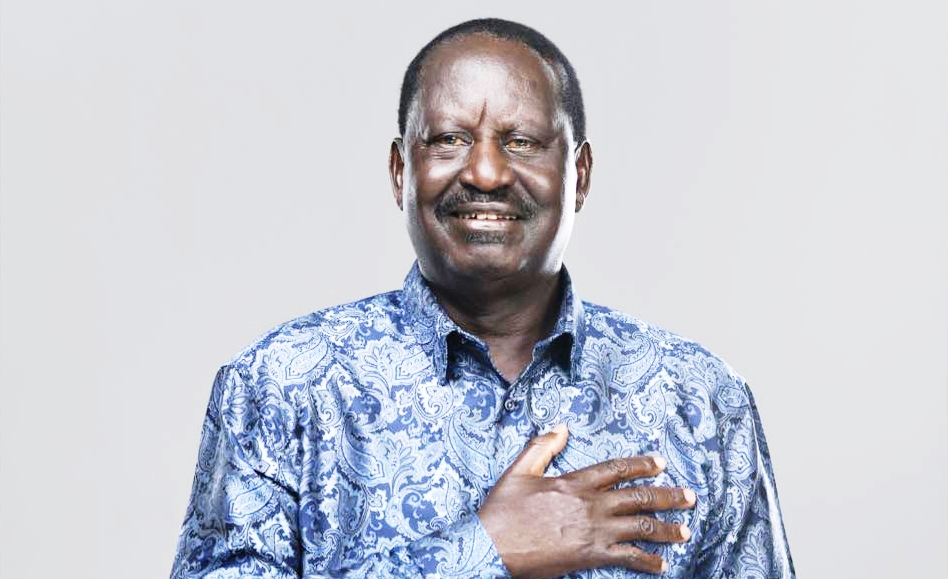
Kenya has lost one of its most enduring political figures — Raila Amolo Odinga, the former Prime Minister whose name became synonymous with resilience, reform, and relentless pursuit of democracy. Odinga, who spent more than four decades at the heart of Kenya’s turbulent political life, died on Wednesday at the age of 80 while receiving treatment in India. His passing marks the end of an era — one defined by courage, controversy, and an unyielding belief that Kenya could be better. From the dusty streets of Kisumu to the grand stages of national politics, Odinga’s influence transcended generations. To some, he was a liberator — a man who fought for multiparty democracy and stood up to autocratic regimes. To others, he was a political enigma — forever close to power, yet never quite seizing it. Born in 1945 to Jaramogi Oginga Odinga, Kenya’s first vice president, Raila seemed destined for politics. But it was his own defiant journey — marked by imprisonment, exile, and comebacks — that defined his legacy. Detained for nearly eight years following the failed 1982 coup, Odinga emerged from prison not defeated but determined. His voice became a rallying cry for freedom, justice, and democratic reform during the 1990s, helping dismantle the one-party system and usher in a new era of political pluralism. Over the years, Odinga contested the presidency five times — in 1997, 2007, 2013, 2017, and 2022 — each campaign stirring passion, hope, and heartbreak in equal measure. His narrow losses often left the nation divided, most notably after the disputed 2007 election that plunged Kenya into violence. Yet even in the aftermath, Odinga chose conciliation, serving as Prime Minister in a coalition government under President Mwai Kibaki. His 2018 “handshake” with then-President Uhuru Kenyatta was another defining moment — a gesture that calmed political tensions and reshaped Kenya’s political alliances. Though it drew both praise and scepticism, it reinforced Odinga’s reputation as a pragmatist willing to compromise for the sake of peace. In his final years, he remained a formidable presence — a moral voice and a political mentor whose influence reached far beyond party lines. His decision in 2024 to join President William Ruto’s broad-based government was seen by many as the culmination of a career marked by both rivalry and reconciliation. “Kenya is greater than any one individual,” Odinga once said. “Our duty is to make her better than we found her.” As tributes pour in from across the world, Raila Odinga’s death leaves a void in Kenya’s political soul. Whether revered or criticised, he was never ignored. A freedom fighter. A reformist. A statesman.
Raila Odinga was, above all, a believer — in Kenya, in democracy, and in the unending power of hope.
End of an Era: Raila Odinga and the Politics That Shaped a Nation
15, Oct 2025 / 2 min read/ By Livenow Africa