
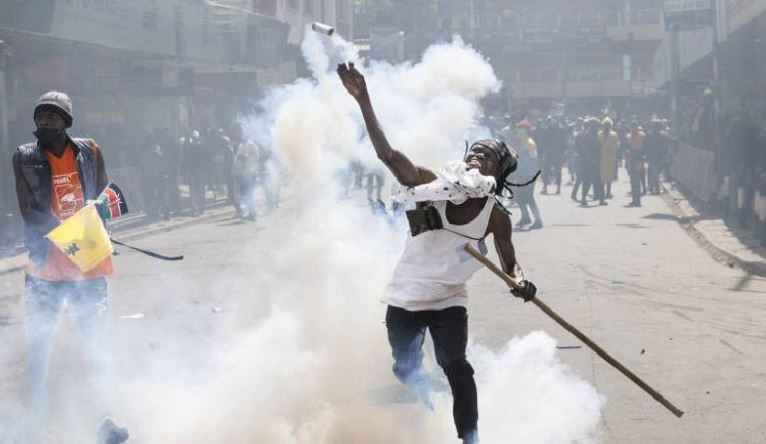
A young man was left with severe injuries on Wednesday after a tear gas canister exploded in his hand during anti-government protests in central Nairobi.
Footage circulating online showed the protester being rushed away on a motorcycle as blood poured from his left hand. A fellow demonstrator, visibly shaken, held a cloth over the wound in a desperate attempt to stem the bleeding.
The explosion occurred during the June 25 demonstrations — a day of national protest marking the anniversary of last year’s deadly anti-Finance Bill rallies. Witnesses say the victim had picked up the canister and attempted to throw it back at police, a tactic that has become common at Kenyan protests and is colloquially known as “returning officers.”
The practice has drawn criticism from medics and rights advocates who warn it can be fatal.
“Do not handle tear gas canisters by trying to throw them back at police,” said Dr Austin Omondi, founder of Medics for Kenya, in a statement posted on social media shortly before the incident. “They will only explode in your hands, leading to possible amputation. Be peaceful and unarmed even as you exercise your constitutional rights.”
A Dangerous Pattern Repeats
Wednesday’s incident wasn’t the first of its kind. During last year’s protests, a police officer reportedly lost both hands after a tear gas canister detonated before it could be thrown. The officer had pulled the pin but waited too long to release it.
According to crowd control experts, tear gas — despite its name — is not a gas but a fine spray of irritant particles dispersed by a small explosive charge. It causes immediate pain in the eyes, skin, and lungs, and is designed to incapacitate temporarily. But mishandling the canisters can result in serious burns, lacerations, and in rare cases, life-changing injuries.
“People see others returning these canisters and think it’s safe or heroic,” said Dr Omondi in a phone interview. “But what they don’t see are the risks — the bone-shattering force if something goes wrong.”
Human rights observers have long criticised both the use of tear gas in crowded, enclosed spaces and the lack of clear training for officers on its safe deployment. In Kenya, where policing of protests is often confrontational, injuries have become a grim part of the landscape.
Calls for Restraint
As news of the injury spread, it sparked renewed calls for calm — not only from government officials but from grassroots organisers themselves.
“We don’t want martyrs. We want justice,” said one protest leader in Nairobi, who asked not to be named for safety reasons. “Let’s not give the police a reason to use force. This is about our message, not violence.”
The protests, largely peaceful through the morning, turned tense in several parts of the capital as police used tear gas to disperse crowds. Demonstrators have vowed to continue marching in honour of those who died during the 2024 unrest, demanding government accountability and economic relief.
But Wednesday’s incident offered a stark reminder of the dangers protesters face — not just from security forces, but from the very weapons they attempt to resist.
For now, doctors and activists are urging restraint.
“Your hands are not meant to catch canisters,” Dr Omondi said. “They’re meant to hold signs, write chants, and hold your future. Don’t throw it away.”